How Strong Is a 3D Print? Real Loads, Plain Answers
Where a printed part is strong, where it splits, how PLA, PETG and TPU differ, and the jobs you should never trust to a 3D print, whatever the material.
The short answer
A well-designed PLA or PETG print is strong enough for everyday household loads: hooks, clips, knobs, cable guides and brackets for light shelves. Its weak point is the bond between layers, so a part pulled across its layers can split at a fraction of the force it takes the other way. Never trust a print with anything where a failure could hurt someone, such as holding a person's weight or something heavy overhead.
"Is it strong?" is the question we get most after "how much?". The honest answer is that a print can be surprisingly tough or surprisingly fragile, and the difference comes down to three things: which way the layers run, which plastic it is, and what kind of force it meets. None of them is magic, and all of them can be planned for if you tell us what the part does.
Layers are the grain
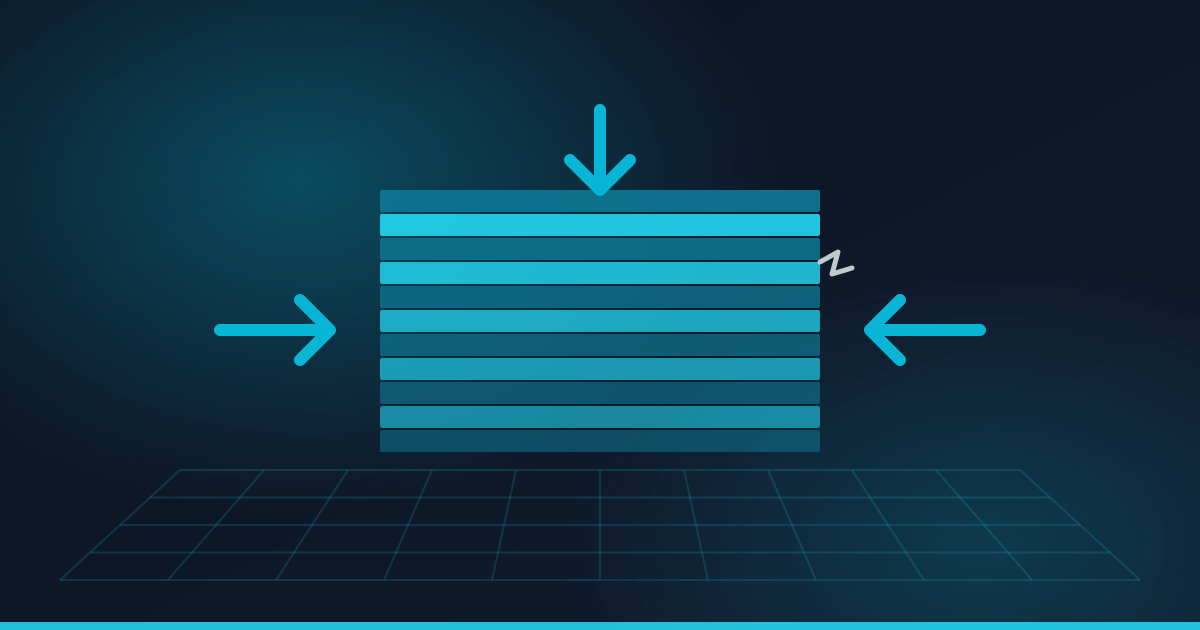
A printed part is built from thin layers stacked on top of each other. Inside each layer the plastic is one continuous strand, which is strong. Between layers it is two strands fused together, which is weaker. Think of it like wood: easy to split along the grain, much harder to snap across it.
Take a simple wall hook. Printed lying flat, the layers run along the arm of the hook and the load bends them as a whole. Printed standing up, the same load tries to peel one layer off the next, and the hook snaps at the bend. Same file, same plastic, a very different part. This is why we orient every part for the load it will carry, and why the most useful thing you can tell us is which direction the force comes from.
How each material behaves
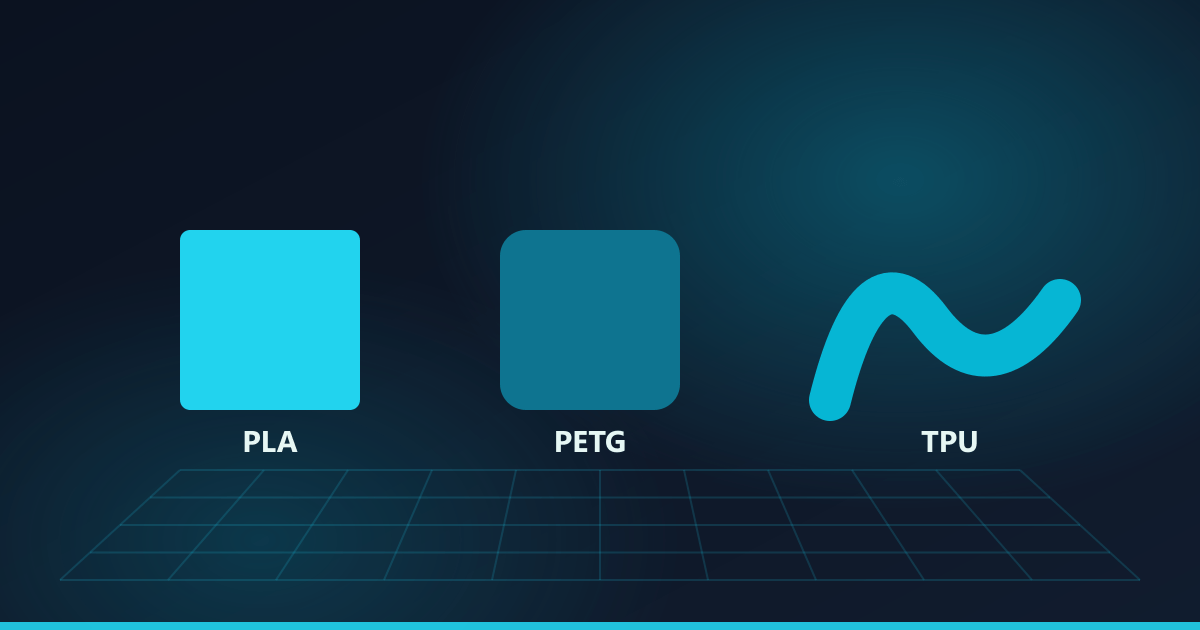
| Material | Feels like | How it fails | Good for | Avoid for |
|---|---|---|---|---|
| PLA | Stiff, hard | Snaps cleanly, with little warning | Indoor brackets, knobs, organisers, models | Anything in strong sun or a hot spot, or under a constant load for years |
| PETG | Stiff but tougher | Bends and whitens before it breaks | Clips, outdoor parts, things that take knocks | Parts that must not flex at all |
| TPU | Rubbery, flexible | Stretches and tears, rarely snaps | Bumpers, grips, feet, gaskets, phone cases | Anything that has to hold its shape under load |
A useful rule: PLA is the stiffest, PETG is the toughest, TPU is the hardest to break and the easiest to bend. If a part will be dropped, clipped on and off, or knocked about, PETG usually lasts longer than PLA even though PLA feels harder in the hand. The full comparison is in PLA vs PETG vs TPU.
What the strength options actually change
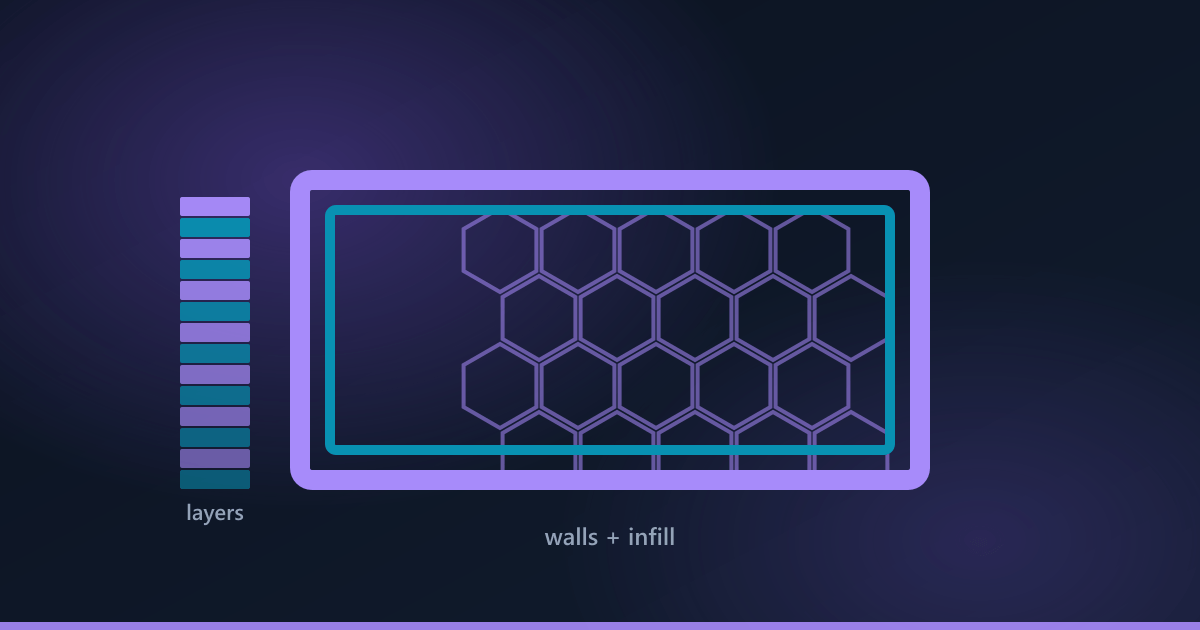
When you upload a file on the instant quote, you pick one of four strength options: Light, Standard, Strong or Solid. They change how much plastic fills the inside of the part. The outer shell is there either way; what changes is the lattice behind it. More plastic inside means a heavier, stiffer part, and a higher price because you pay for the plastic used.
As an example, a palm-sized PLA part with 60 cm³ of volume works out at about $4.22 on Light, $4.95 on Standard, $6.77 on Strong and $10.42 on Solid, before the service fee and delivery. That is an estimate from our pricing formula; your own file decides the real number.
Two things worth knowing. First, Solid is rarely the best buy: the shell carries most of the load, so going from Strong to Solid adds a lot of cost for a modest gain. Second, the strength option cannot fix a part that is loaded across its layers or has a sharp inside corner where the stress gathers. Design and orientation matter more. Layer height, infill and walls explains why without jargon.
Things a print handles well
- Wall hooks for coats, bags and keys, printed in the right orientation.
- Brackets and supports for light shelves, cable trays and routers.
- Clips, latches and snap fits that are opened and closed by hand.
- Replacement knobs, handles and caps for furniture and appliances, away from heat.
- Enclosures for electronics, organisers, stands and holders.
- Jigs and guides for a workshop, where a worn one is simply reprinted.
Things not to trust to a print
These are not about picking a better material. They are jobs where printed plastic is the wrong answer, because a failure would be dangerous and a print's strength varies with things you cannot see from the outside.
- Anything that takes a person's weight: step stools, ladder parts, chair legs, swing or hammock fittings, fitness and climbing gear.
- Anything heavy hanging overhead: TV mounts, ceiling fittings, heavy mirrors or shelves above a bed or a doorway.
- Safety equipment of any kind: helmets, protective gear, child safety locks, baby equipment.
- Anything under pressure: gas fittings, water mains, pressure cookers.
- Anything near a flame, a stove, a heater or a kettle's hot surfaces.
Heat and slow bending
One failure catches people out: a part that is fine on day one and sags a month later. Plastic under a constant load slowly creeps, and PLA creeps faster as it warms up. A PLA shelf bracket in a cool room can last for years; the same bracket on a sunny balcony in a Lebanese August can bend out of shape. For anything outside, in a window or near a heat source, choose PETG. Which filament survives a Lebanese summer has the detail.
Getting a stronger part
- Say what the part does and which way the force comes from. Add it in the order notes, or describe it on the custom request form if you have no file.
- Round off sharp inside corners. Stress gathers there and cracks start there.
- Make the part thicker where it bends, rather than solid everywhere.
- Pick PETG for anything that flexes, clips or lives outside.
- Use metal screws or inserts for joints that are tightened and loosened often.
Frequently asked questions
Is a 3D printed part strong enough to hold a shelf?
A printed bracket can hold a light shelf of books or small items indoors when it is designed and oriented for the load, ideally in PETG. It should not be used for heavy shelves, anything above a bed or doorway, or anything where a fall could hurt someone.
Is PETG stronger than PLA?
PETG is tougher: it bends before it breaks and copes better with heat and sun. PLA is stiffer and holds its shape better under light loads indoors, but it snaps suddenly and softens in strong sun or a hot window.
Does choosing Solid make a print as strong as possible?
It makes the part heavier and stiffer, but it is rarely the best value. The outer shell carries most of the load, so Strong usually gives most of the benefit for much less money. Orientation and design matter more than the strength option.
Why did my 3D print break along a line?
It almost certainly split between two layers. The bond between layers is the weakest direction in any printed part, so a load pulling across the layers breaks it far more easily than one running along them. Printing it in a different orientation usually fixes it.
Can a 3D printed part take a person's weight?
Do not use one for that. Step stools, chair legs, ladder parts, swing fittings and climbing gear need parts made and rated for the load. A print's strength varies with things you cannot see, and the failure would be dangerous.
Got a file to print?
Instant price, delivered anywhere in Lebanon for a flat $5.