FDM vs Resin Printing: Which One Do You Actually Need?
Resin looks better in photographs. FDM is what you want for almost every real part. Here is the honest split, and where each one loses.
The short answer
FDM — melted plastic filament — is right for functional parts, brackets, enclosures, prototypes and anything that must be strong or large. Resin (SLA) is right for very small, highly detailed objects such as tabletop miniatures, jewellery masters and dental models. FDM parts are tougher, cheaper and larger; resin parts are finer but brittle, smellier to produce and need washing and curing after printing.
These are two different processes that happen to share a name. Choosing wrongly is the most common reason someone is disappointed by a print that came out exactly as ordered.
How each one works
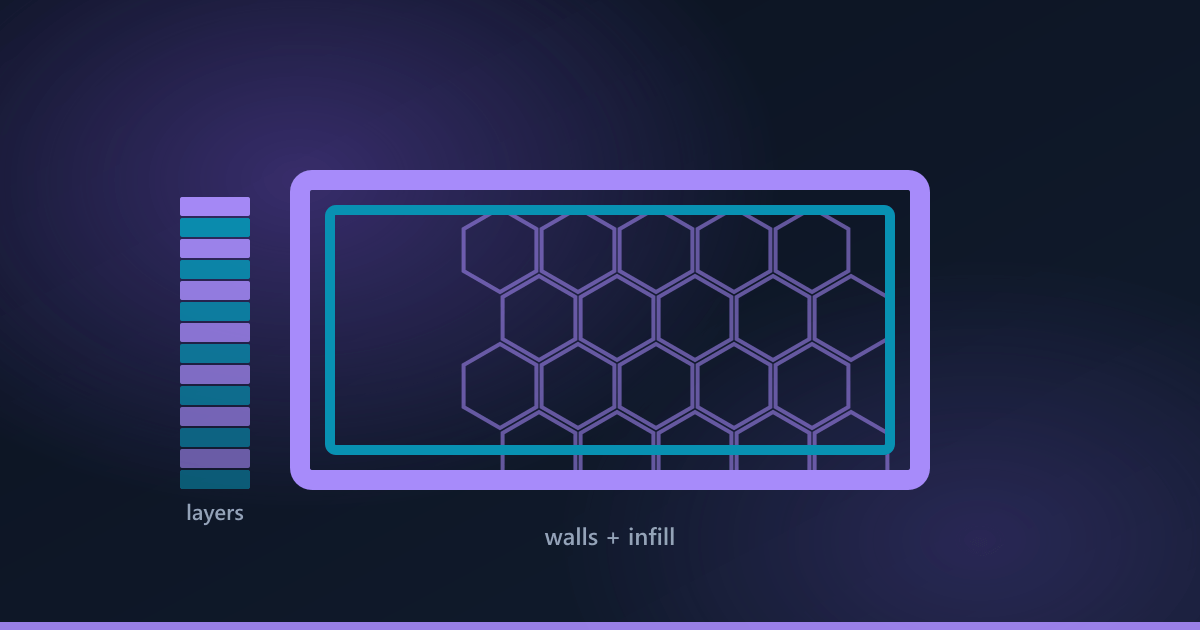
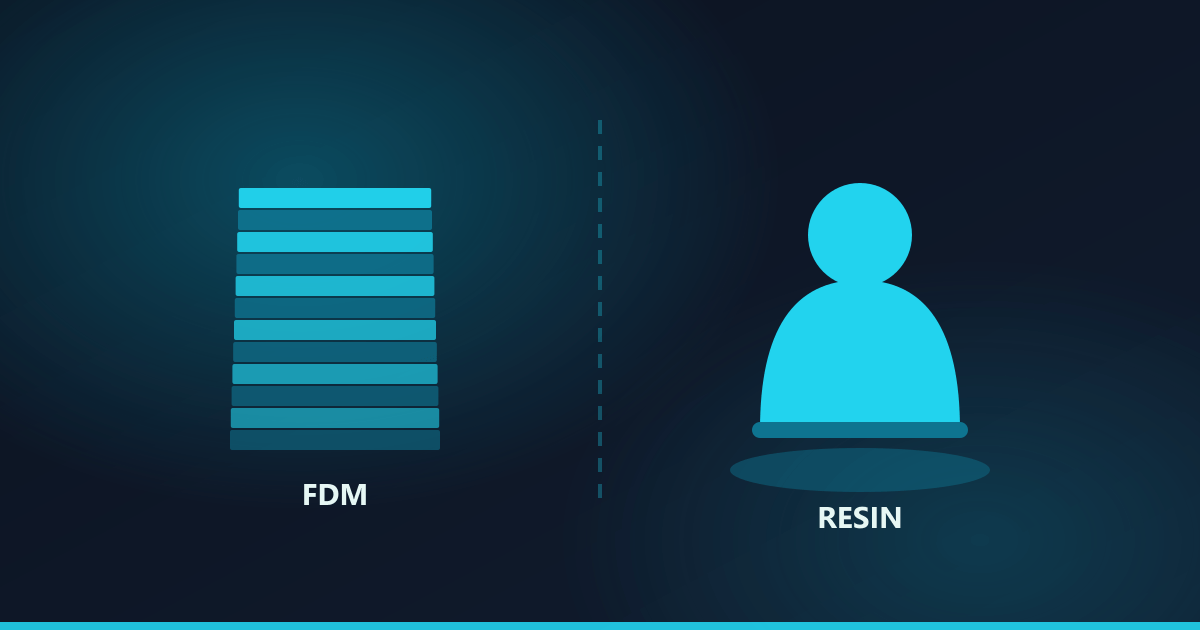
FDM melts a plastic filament and draws the object one thin layer at a time, like a very precise glue gun following a plan. Resin printing cures a vat of liquid photopolymer with light, lifting the finished object out of the liquid layer by layer.
| FDM (filament) | Resin (SLA/MSLA) | |
|---|---|---|
| Detail | Good — layer lines visible up close | Exceptional — layer lines nearly invisible |
| Strength | Tough, slightly flexible, survives drops | Hard but brittle; snaps rather than bends |
| Size | Large parts routine | Small build area; big parts are impractical |
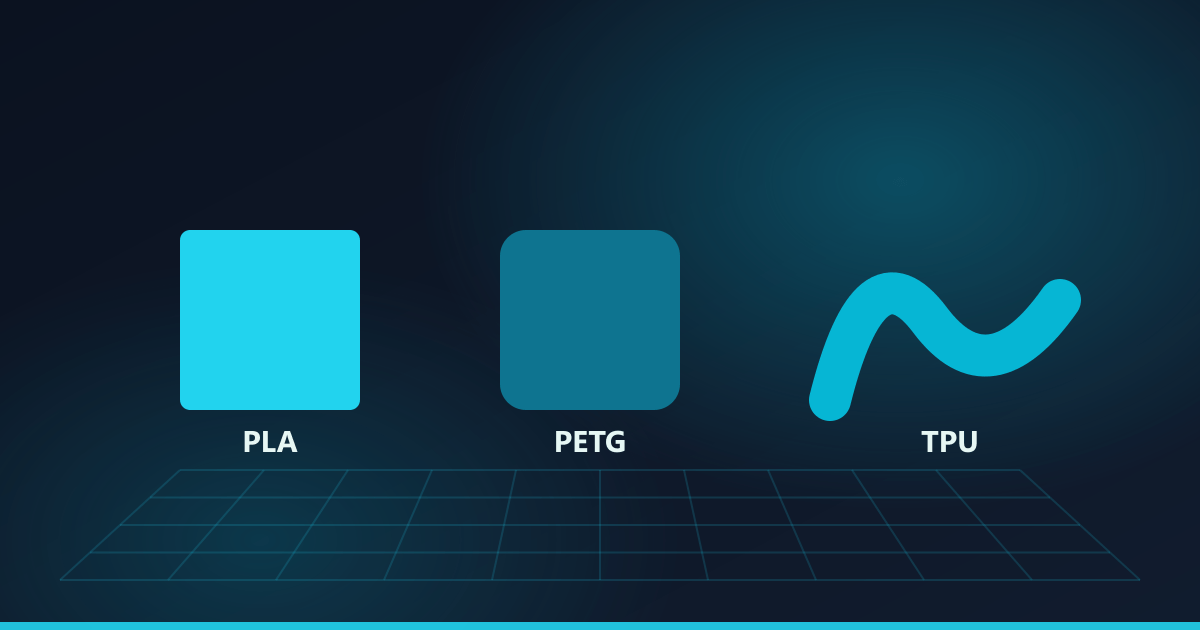
| Materials | PLA, PETG, TPU, ABS, nylon, composites | Resins, mostly cosmetic or specialist |
| Cost | Lower per part | Higher, and resin is dearer per kilo |
| Post-processing | Remove supports, done | Wash in alcohol, then UV cure, then supports |
| Safety | Ventilate the room | Gloves, ventilation; uncured resin is an irritant |
Choose FDM when
- The part has a job — a bracket, a clip, an enclosure, a jig, a replacement component.
- It is bigger than a fist.
- It has to survive being dropped, bent, or left in a bag.
- You want it cheaply, and you want more than one.
- It is a prototype you will revise next week.
Choose resin when
- The object is small and the detail is the entire point — miniatures, figurines, scale detailing.
- It is a master pattern for casting jewellery or dental work.
- Surface finish matters more than toughness, and it will sit on a shelf.
The layer-line question
The usual reason people ask for resin is that they have seen FDM layer lines and want a smoother finish. Three things worth knowing before deciding on that basis. A finer layer height reduces them significantly, at the cost of print time. Orientation matters more than most people expect — the same model can look markedly better printed at a different angle. And for a display piece, a light sand and a coat of primer removes them entirely, which is standard practice on painted models.
What about architectural models?
Almost always FDM. Scale models are large, they are handled and transported, and they are usually painted or finished anyway. Resin would be more fragile, far more expensive at that size, and would need splitting into many more pieces.
Frequently asked questions
Is resin printing better than FDM?
Only for small, highly detailed objects. For anything functional, large, or that must survive handling, FDM is stronger, cheaper and more practical. They are different tools rather than better and worse ones.
Do you offer resin printing in Lebanon?
No — we print FDM. If your part is genuinely a resin job we will tell you, because a poor FDM version of a miniature helps nobody.
Can FDM prints be made smooth?
Yes. A finer layer height helps, orientation helps more than people expect, and sanding with a coat of primer removes layer lines completely on parts that will be painted.
Which is stronger, resin or FDM?
FDM, for practical purposes. Standard resins are hard but brittle and tend to snap under impact, while PETG and PLA parts flex a little first. Tough engineering resins exist but are specialist and expensive.
Which should I use for tabletop miniatures?
Resin, without much argument. At 28 mm scale the detail difference is exactly what the model is for.
Got a file to print?
Instant price, delivered anywhere in Lebanon for a flat $5.